
Collaboration on new degree programmes
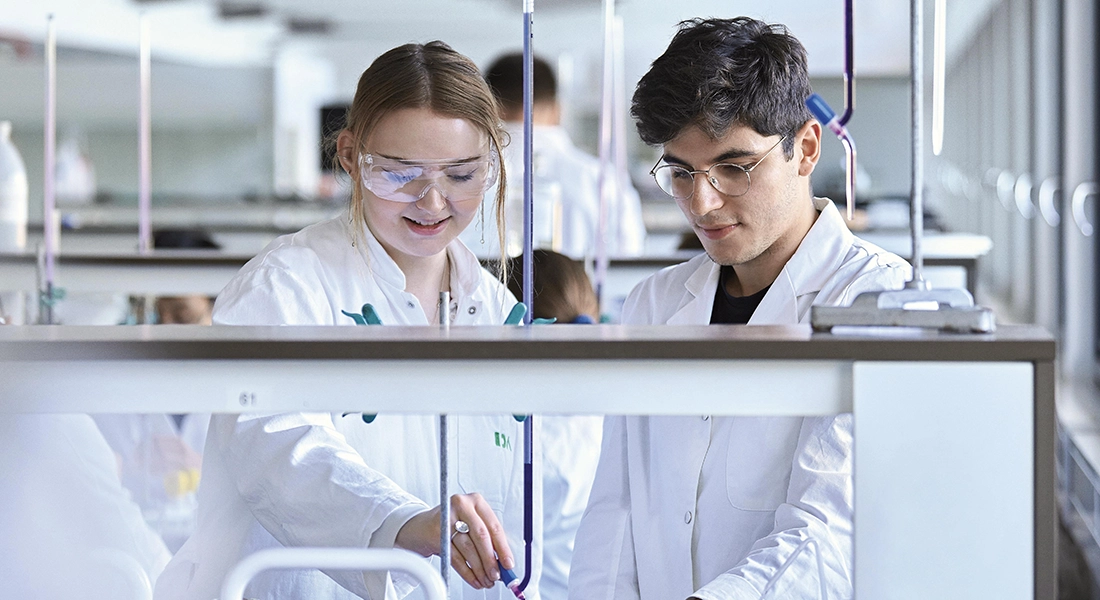
The University of Copenhagen invites private and public organizations to engage in close, long-term collaboration to develop new study programs, ensuring they are attractive and relevant for both students and employers.
New degree programmes in new formats – developed together with the business sector
The University of Copenhagen is in the process of developing new master's degree programmes based on the reform of university education in Denmark.
As part of this process, we are inviting the business sector to discuss what skills UCPH graduates need – and models for how the new flexible master's degree programmes can be relevant for businesses. For such models, businesses, public-sector workplaces and organisations have crucial knowledge about many areas of expertise.
Vision for new master’s degree programmes at UCPH
The aim of the new master's degree programmes is to create future-proof programmes that match both students’ ambitions and the job market’s needs.
When developing the programmes, we have a clear vision. Our master’s degree programmes must be:
- Attractive to students
- Preferred by employers
- Embedded in strong research environments.
This requires that the programmes create value – for students and for the businesses and organisations in which they will be working after graduation.
The future educational landscape
The future educational landscape will consist of three main types of master’s programmes:
- Master's degree programmes of 120 ECTS, as we know them today
- Focused master's degree programmes of 75 ECTS with a clear academic and job-oriented profile
- Work-and-study master's degree programme of 75 or 120 ECTS with flexible models where one or two semesters can be full-time studies before the programme continues with part-time employment.
The business sector is invited to take part
When the University of Copenhagen develops its new master's degree programmes in close collaboration with businesses, organisations and public-sector workplaces, the sector will contribute with its needs.
This means that employers will get:
- Highly motivated graduates with strong academic expertise
- Degree programmes designed with the job market’s needs in mind
- Increased focus on employment and sought-after skills
- The opportunity to influence the content and direction of the new degree programmes.
- Collaborating is essential to ensure relevant degree programmes and a smooth transition from university to working life.
Working together on future skills
The University of Copenhagen wants to enhance and grow a close, long-term collaboration with the business sector. Through dialogue and partnerships, we invite businesses and organisations to actively contribute to developing tomorrow’s master’s degree programmes.
A collaboration may include:
- Sharing knowledge about needed skills, how the job market evolves and new trends
- Partnerships on education and skills development
- Joint contribution to building the workforce of the future
Through a committed collaboration, we can ensure that the degree programmes continue to be relevant and match both society’s and the job market’s needs.
Contact
Please contact us to discuss potential collaboration opportunities.
Rikke Rosager Sørensen
rrs@adm.ku.dk
+45 35 32 92 53
Anne Fledelius
anne.fledelius@adm.ku.dk
+45 35 32 62 90